In a country where everyone seems to have an opinion about everything, one question often pops up: how many Catholics are there in the US? It’s a number that sparks curiosity, debates, and maybe even a few spirited discussions over Sunday brunch. With millions of faithful filling pews, the Catholic Church remains a significant player in the American religious landscape.
Overview of Catholicism in the US
Catholicism holds a significant place in the religious framework of the United States. It accounts for approximately 22 percent of the total population, representing around 70 million individuals. This community actively engages in various religious practices and upholds traditions that date back centuries.
The Catholic Church remains one of the largest religious organizations in the country. Archdioceses and dioceses operate across all 50 states, providing services and outreach to local communities. Many parishes host events, outreach programs, and education for believers and non-believers alike.
Active participation characterizes the Catholic faithful in the US. Regular attendance at Mass is prevalent, with many congregations offering multiple services each week. Educational institutions, such as elementary schools and universities, contribute to the faith’s influence by imparting values and beliefs to younger generations.
The diverse demographic of American Catholics impacts the Church’s growth. Immigrant communities particularly enhance its vibrancy, bringing cultural richness and different expressions of faith. These groups often maintain strong connections to their heritage while integrating into the broader American society.
Catholic social teaching plays a pivotal role in guiding behavior and attitudes toward social issues. Advocacy for the marginalized and involvement in humanitarian efforts demonstrate the commitment to service that characterizes many congregations. Prominent issues, such as immigration reform and healthcare initiatives, reflect the Church’s active engagement in shaping public discourse.
Catholicism continues to thrive in the United States. Its rich history, diverse membership, and active involvement in social issues underscore its importance in the American religious landscape.
Current Statistics on Catholics in the US
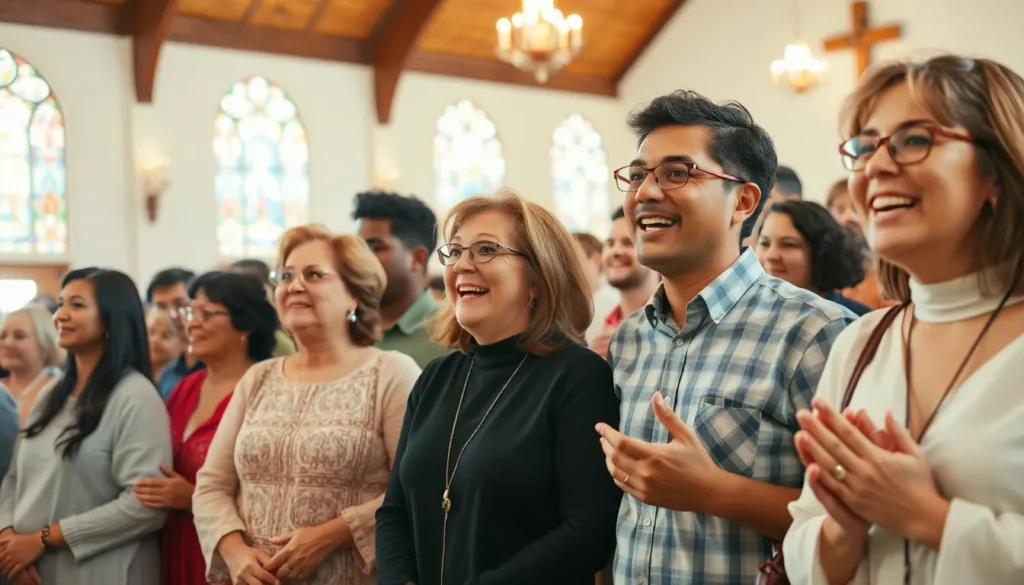
Catholicism holds a significant place in the United States, represented by millions. Recent data sheds light on the current metrics of this religious group.
Total Number of Catholics
Approximately 70 million Catholics live in the United States. This figure reflects a diverse community engaging in various religious practices. Each archdiocese and diocese serves these individuals across all 50 states. Parishes actively foster connections through community outreach and events. The Church’s presence remains prominent, contributing to the nation’s spiritual landscape.
Percentage of the Population
Catholics comprise around 22 percent of the U.S. population. This statistic emphasizes their substantial role in the broader religious context. Comparatively, this percentage translates to one in five Americans identifying as Catholic. Numerous active congregations support this engagement, showcasing the faith’s relevance and vitality. Growing immigrant communities further enrich this demographic, adding cultural depth to Catholicism in America.
Historical Trends in Catholicism
Catholicism in the United States has undergone significant changes over the years. Approximately 70 million Americans identify as Catholic, accounting for roughly 22 percent of the population.
Growth Over the Years
Catholic numbers in the U.S. have expanded since the 19th century. Rapid immigration played a critical role from countries like Ireland, Italy, and Poland, influencing church demographics. By the early 20th century, Catholics comprised about 15 percent of the population. The post-World War II era saw further growth, driven by returning veterans and their families. Current estimates show stability, with 1 in 5 Americans identifying as Catholic today. Urban areas particularly show concentrated Catholic communities that contribute to the Church’s ongoing presence and vibrancy.
Major Events Influencing Numbers
Significant events shaped Catholic demographics in the U.S. The Second Vatican Council (1962-1965) modernized aspects of the Church, affecting member engagement. Scandals in the early 2000s prompted a decline in membership and attendance rates. Notably, the rise of the Hispanic population has also influenced church dynamics, as many identify strongly with Catholic traditions. Outreach efforts and community services have kept the Church relevant, showcasing its enduring role in American society. By addressing contemporary issues, the Church continues to attract diverse followers, reflecting broader societal changes.
Regional Differences in Catholic Membership
Catholic membership in the U.S. varies significantly by region. Understanding these differences highlights the unique landscape of faith across the country.
States with the Highest Populations
California, Texas, and New York top the list of states with the largest Catholic populations. California boasts over 10 million Catholics, reflecting its diverse cultural makeup. Texas follows, with approximately 8 million adherents, driven by a significant Hispanic community. New York accounts for about 7 million Catholics, emphasizing its long-standing Catholic heritage. Florida and Illinois also demonstrate robust Catholic populations, each with more than 4 million individuals. These states play a crucial role in shaping Catholicism in the U.S. through active participation and various outreach programs.
States with Declining Numbers
Several states experience declining Catholic numbers, affecting overall engagement. Massachusetts, once a stronghold for Catholicism, shows a notable decrease over recent years, with membership dropping to about 3 million. Similarly, Michigan reports a decline, attributed to the shifting demographics and economic factors impacting urban areas. New Jersey has witnessed a slow but steady loss in Catholic membership, reflecting broader trends in religious affiliation across the region. Other states, such as Pennsylvania and Ohio, also exhibit decreasing populations yet maintain vibrant communities. These trends underscore the challenges facing the Catholic Church in adapting to changing societal contexts.
Factors Influencing Catholic Population Changes
Several factors contribute to shifts in the Catholic population in the United States. These influences shape the faith’s presence and its interaction with society.
Immigration and Demographics
Immigration serves as a significant driver of Catholic population growth. Many immigrants from Latin America contribute to the rise of the Hispanic Catholic community, which has become vital to the Church’s vibrancy. This demographic shift enhances the cultural richness of Catholic practices, bringing new traditions and perspectives. Regions with high immigrant concentrations, like California and Texas, show robust growth in Catholic numbers. Approximately 45 percent of U.S. Catholics now identify as Hispanic, reflecting the changing landscape. Immigrants often seek support from local parishes, fostering community ties and increasing overall participation in church activities.
Conversion Rates
Conversion rates play a crucial role in shaping the Catholic demographic. New members frequently join the Church through initiation programs and personal explorations of faith. Approximately 100,000 individuals undergo the Rite of Christian Initiation for Adults (RCIA) annually, reflecting a steady influx of converts. Additionally, outreach efforts and inclusive practices are vital for attracting new members. Since the Church’s teachings resonate with diverse groups, it draws individuals searching for spiritual fulfillment. Families often transition to Catholicism together, strengthening community bonds and encouraging multi-generational participation. Active engagement and welcoming environments support these conversion trends, contributing to the Church’s sustainability amidst broader societal changes.
The Catholic Church remains a vital force in the United States, influencing millions of lives through faith and community engagement. With approximately 70 million adherents, it’s clear that Catholicism plays a significant role in shaping American culture and values.
As the demographic landscape continues to evolve, the Church adapts to meet the needs of its diverse followers. The commitment to outreach and social justice highlights its relevance in today’s society.
Despite facing challenges, the resilience of the Catholic community ensures that it will continue to thrive, fostering connections and nurturing faith across generations. The future of Catholicism in the U.S. promises to be as dynamic as its rich history.